"I strongly believed that when I filmed it—the audition tape—that I could win it all. Probably as the competition started, my confidence slowly dipped off because it was a lot harder than I thought it was going to be and a lot more stressful," Eric recalled. "With all the behind the scenes stuff, it was quite difficult. It was still a good experience, and I would do it again."
It wasn't all peaches and cream being part of a cooking competition that was televised to millions of Canadians every week. Not only did Eric have to cook his heart out each week or be in fear of being eliminated, but the logistics of filming was something he did not expect to be so challenging.
"I’d say just the hours and the time it took to put the show together," he said when asked about his most stressful times. "You are locked in a hotel, no phone, no Internet for about six weeks, and then you have to wake up early, drive, commute to the studio, do all the make up, and film for about 12 hours for only half an episode." Eric also shared how he wished he could eat more during the filming of the season, or at the very least, sample the food the other contestants would cook up. "I’m not going to say they didn’t feed us. It’s just you really don’t get to eat that much. I know it’s funny because it’s a cooking show, but you never get to eat much of your own food let alone anyone else's. You cook it, then you just leave, walk off, and then break."
This has always been one of the most intriguing parts for me when watching a reality TV show: the action behind the scenes. What actually happens when the cameras go off?
"Cameras off, you are actually sleeping or reading cookbooks, or practicing cooking in your own kitchen," Eric revealed. "Fortunately enough, the hotel that they put us in had a kitchen, and it was like a suite. It was good to practice. I think everyone was just way too nervous to just relax, so it would either be just reading up on cookbooks, practicing recipes, or just catching up on sleep." One thing that Eric confirmed is that the contestants really have no idea of what the challenges would entail ahead of time, and that, when they were only allowed an hour to cook a dish, they did not get a second more. "A lot of people don't believe that when they say 60 minutes, you only get 60 minutes. And when they reveal what we're about to cook in that week's episode, that's the first time we've ever seen it."
If you have seen Eric's season of Masterchef Canada, you would remember that he was very upfront about his parents not entirely supportive of his pursuit of becoming a chef. Prior to the show, Eric studied Chemical Engineering at McMaster University (my alma mater!), and his parents hoped he would eventually find himself a stable, well-paying job in this area. As they saw it, being a chef was not as glamorous as being a lawyer, doctor, or an engineer in his case. However, the tides turned after Eric won the title of Masterchef Canada and the accompanying $100,000 grand prize. So what exactly do his parents think of him now as a full-time chef?
"They are 100% supportive now. I definitely wouldn’t have gotten this far without having won Masterchef Canada. I think had I not won, for sure I probably would still be an engineer. If I didn’t win, then of course Alvin wouldn’t have partnered up with me, and that was a big swinging point for my parents’ support."
After the show’s conclusion, Eric partnered with Masterchef judge and 3 Michelin Star Chef, Alvin Leung (a.k.a. the Demon Chef), to open R&D (short for Rebel & Demon), a modern Asian restaurant in downtown Toronto. With a nickname like the Demon Chef, one has to ask just how intimidating Alvin really is.
"He’s probably the most eccentric guy you will ever meet. He takes his work extremely seriously. You can’t get 3 Michelin stars without being a perfectionist," Eric stated. "He runs his business like a dictator, he demands what he wants, he gets what he wants, and anything less than that will piss him off severely. But outside of work, he’s probably the nicest, most generous guy you will ever meet. The demon chef is a good name. He is extremely serious and scary in the kitchen, but outside of the restaurant when we go eat, have dinner at each other’s houses, he is super nice, super generous, and a really funny guy. Loves to joke around."
Bearing an uncontainable grin, Eric also mentioned that Alvin is something of a kid at heart. "He's like a big kid sometimes. He’s a huge Batman fan, collects all the Batmobiles, action figures, movies, all kinds of Batman memorabilia. He’s like a kid in a candy store when he is shopping for Batman."
It's now been over a year since R&D opened alongside Alvin, and Eric noted that since its unveiling, his biggest challenges have been the management of costs and maintaining the quality of his dishes. "The most key thing in a restaurant would be consistency. If I were to cook a dish, and a new guy were to cook that same dish, the customer shouldn’t know the difference. So that is a pretty scary thought when you think of it that way. I need to train him to be just as good as me, if not better. So definitely training the cooks for consistency is a huge challenge in running a restaurant."
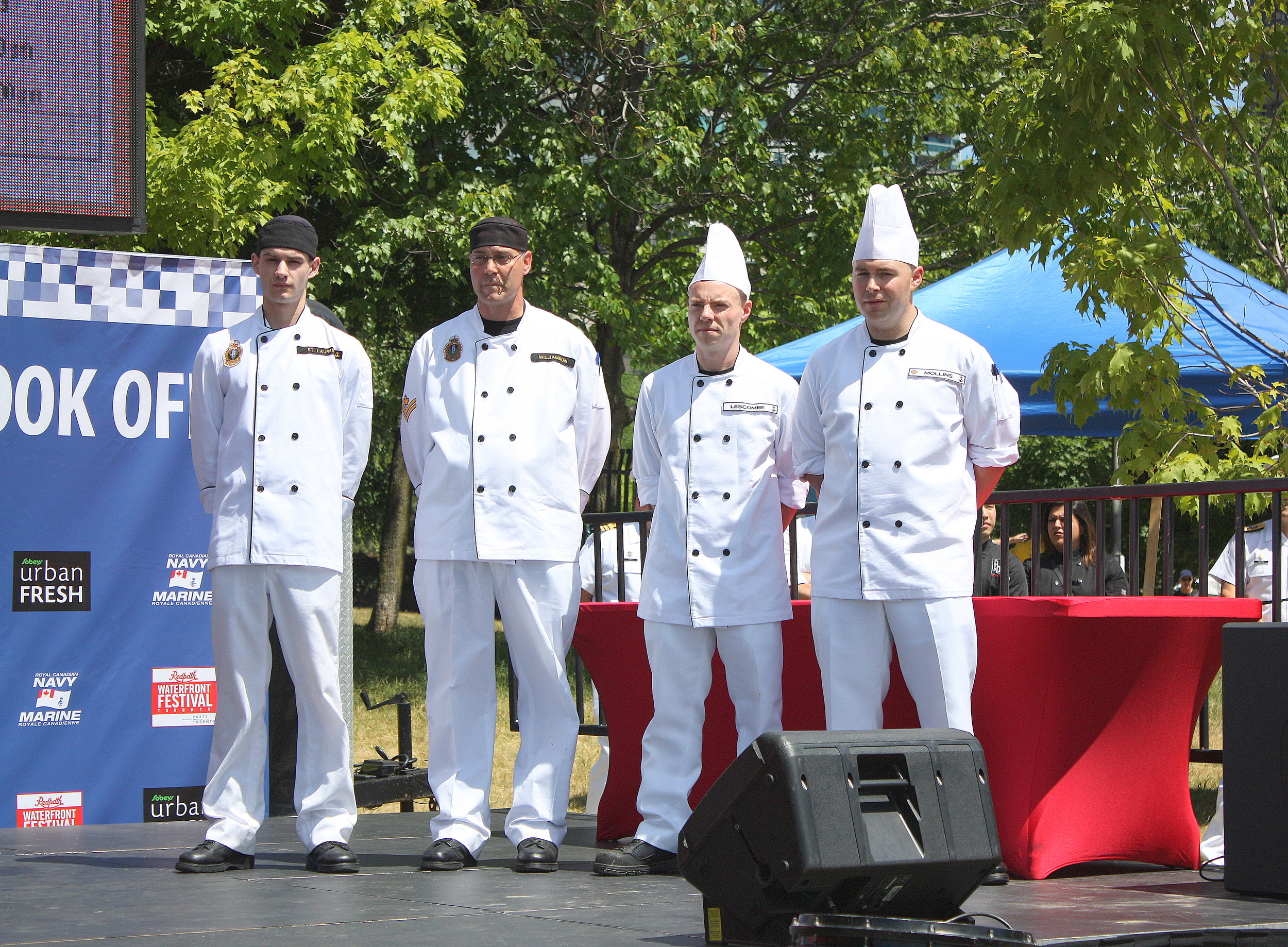
During this time of our interview, the Marlant team from Nova Scotia and the Marpac team from British Columbia had already begun duelling it out for the Navy Cook title, and it was up to Eric and his fellow judges to decide on the winner. So just what was Eric looking forward to most about being on the other side of the fence as a judge?